The Complete Post-Move Checklist: 18 Essential Tasks for Your New Home

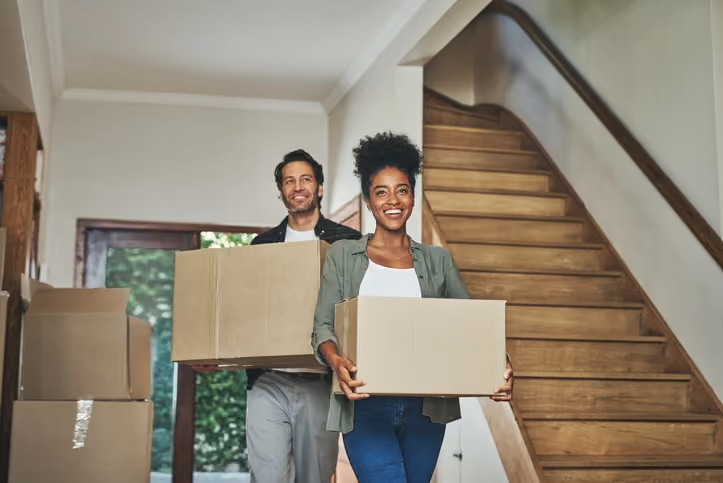
Moving into a new home is an exciting milestone, but the process doesn't end when the moving truck drives away. In fact, the first few days and weeks in your new space are crucial for establishing security, comfort, and organization.
To help you navigate this transition smoothly, Flex has compiled the ultimate post-move checklist. From immediate safety measures to long-term community integration, here are the 18 essential tasks you need to complete after moving.
📋 Streamline Your Move: Want to check these off as you go? Download our printable post-move checklist here to keep your transition perfectly organized.
1. Change the locks and secure your new home
Your home should be your sanctuary, and safety comes first. You have no way of knowing how many duplicate keys the previous owners, real estate agents, or maintenance workers might still have. Hire a professional locksmith to change the exterior locks or install smart locks on day one to ensure full control over who has access to your property.
2. Locate your fuse box and main water shut-off valve
Don’t wait for an emergency to figure out where your utilities live. Take a few minutes to find the electrical panel (fuse box) and the main water shut-off valve. If a pipe bursts or a breaker trips, knowing exactly where to go can save you from catastrophic property damage and costly repairs.
3. Test smoke detectors and carbon monoxide alarms
Protect your family by testing all pre-installed smoke detectors and carbon monoxide (CO) alarms immediately. Replace old batteries with fresh ones, and check the expiration dates on the devices. If your new home lacks adequate coverage, install additional alarms near bedrooms and on every level of the house.
4. Inspect your home for damage or needed repairs
Walk through your new property with a critical eye. Check for any plumbing leaks, structural damage, or electrical issues that may have occurred during the move or were missed during the initial home inspection. Documenting these issues early is especially important if you are renting or need to file a claim with your homeowners insurance.
5. Set up utilities in your new house
Hopefully, you scheduled your utility transfers ahead of time, but now is the time to confirm everything is running smoothly. Ensure your electricity, gas, water, and trash collection services are properly established under your name so you don't face any unexpected service interruptions.
6. Connect major appliances
If your move involved transporting appliances like a refrigerator, washing machine, or dryer, get them hooked up right away. Make sure water lines for refrigerators and washers are securely fastened to prevent slow leaks, and verify that your dryer vent is properly cleared and connected.
7. Deep clean or hire cleaners before unpacking
It is infinitely easier to clean a house when it is completely empty. Before you start unboxing your belongings, take the time to deep clean the floors, baseboards, cabinets, and bathrooms. If your moving schedule allows, hiring a professional move-in cleaning service can save you massive amounts of time and energy.
8. Unpack essentials and your first-night box
Avoid tearing through dozens of boxes just to find a toothbrush or a change of clothes. Locate your designated "first-night box"—which should contain bedding, toiletries, basic cookware, charger cords, and pajamas—and unpack those items first. This ensures a comfortable and low-stress first evening in your new space.
9. Set up internet and phone services
In today’s connected world, getting your Wi-Fi up and running is often a top priority—especially if you work from home. Coordinate with your local internet service provider (ISP) to install your modem and router, and test your connection across your devices to ensure optimal signal strength.
10. Childproof and pet-proof your home
A new environment presents new hazards for curious children and pets. Before letting them roam freely, secure loose cords, install safety gates near stairs, lock up cleaning supplies, and check the yard for any gaps in fencing or toxic plants.
11. Update your address with USPS and important contacts
Avoid missed mail and late bills by officially changing your address through the United States Postal Service (USPS) website. Additionally, update your billing information with your bank, credit card companies, subscription services, and employers as soon as possible.
12. Organize important documents for your new address
With the chaos of moving boxes, critical paperwork can easily go missing. Designate a secure, fireproof filing cabinet or lockbox for essential items like passports, birth certificates, medical records, tax documents, and your new lease or mortgage paperwork.
13. Transfer or update your insurance policies
Your insurance needs may shift depending on your new location. Contact your insurance provider to update your homeowners or renters insurance policy to reflect your new address. This is also an ideal time to review your auto insurance policy, as moving to a new ZIP code or state can impact your premiums.
14. Register your vehicle and update your driver's license
If you’ve moved to a new state or county, you will need to visit the local DMV to update your driver’s license and register your vehicle. Most states have strict timelines (often between 30 to 90 days) for updating this information, so check local regulations to avoid penalty fees.
15. Register your children for their new school
If you have school-aged children, prioritizing their academic transition is key. Contact the local school district to submit required residency documents, immunization records, and transcripts from their previous school so they can settle into their new classrooms without delay.
16. Find healthcare providers near your new home
Don’t wait until you get sick to search for a doctor. Research local primary care physicians, dentists, specialists, and the nearest urgent care centers or emergency rooms. Getting established as a new patient early ensures you have access to medical care whenever you need it.
17. Introduce yourself to your new neighbors
Building a strong community starts with a simple hello. Take a walk around your block or introduce yourself to neighbors when you see them outside. Friendly relationships with neighbors elevate neighborhood safety and make your new area truly feel like home.
18. Explore your new neighborhood
You’ve done the hard work—now it’s time to enjoy the rewards! Take some time to drive or walk around your new town. Locate the nearest grocery stores, parks, coffee shops, and restaurants. Immersing yourself in your local community is the absolute best way to turn a new house into your home.
For more tips on managing your home, finances, and lifestyle smoothly, visit us at GoFlex.com.
Same day moves available!
We'll get you moving today.